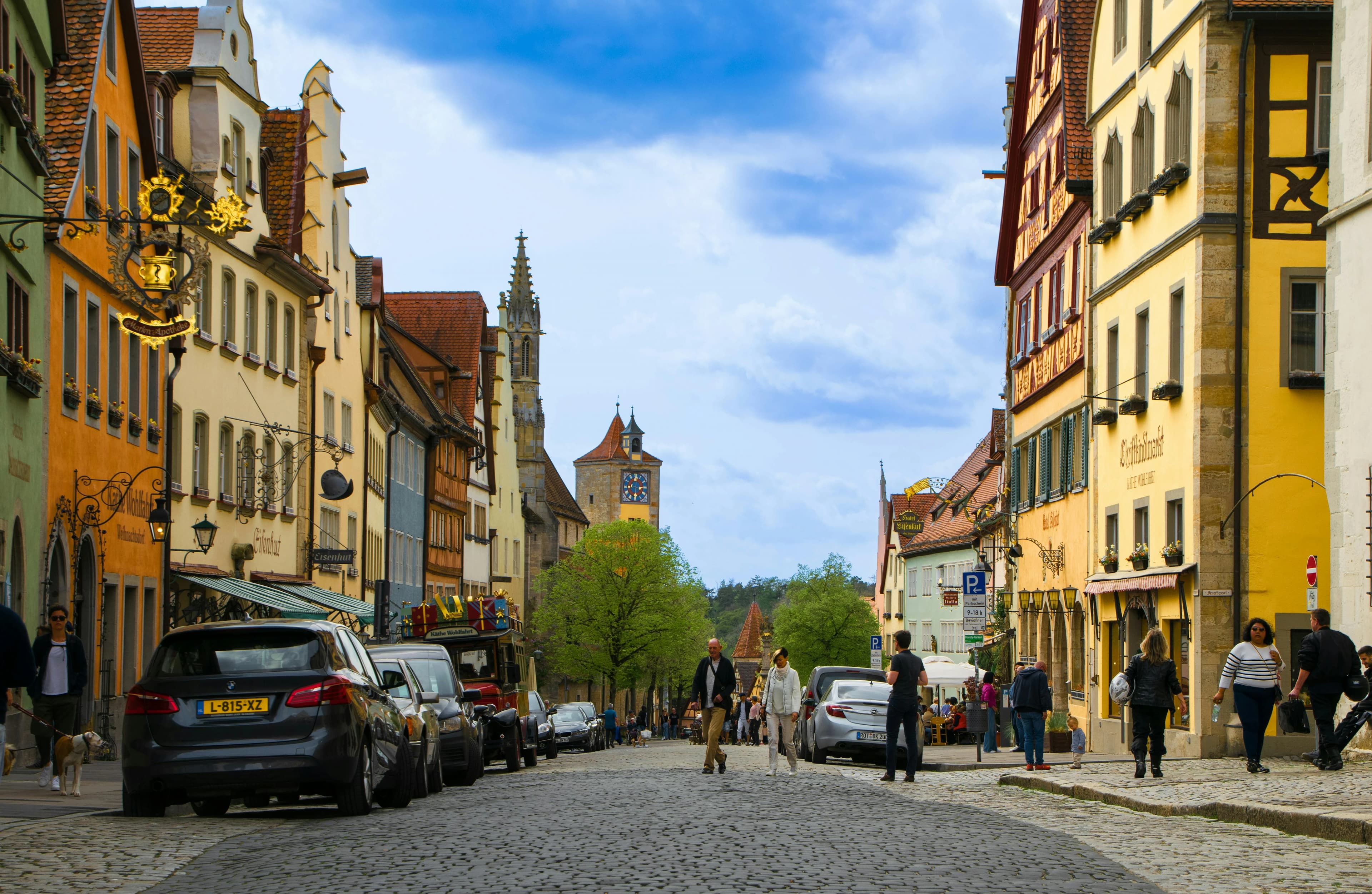
German street names are more than just navigation aids - they’re linguistic artefacts encoding history, politics, and local identity. Unlike the bland 'Main Street' or 'Park Avenue' common in anglophone countries, German streets often bear names that demand explanation. Here’s how to read them.
The Four Categories of German Street Names
- Historical Figures: From Goethe to Bismarck, these names reflect cultural and political reverence. Note the suffix '-straße' (street) or '-platz' (square) attached.
- Geographical References: 'Am Waldrand' (at the forest edge) or 'Seestraße' (lake street) signal proximity to landmarks. These are straightforward but often poetic.
- Occupational Clusters: Medieval towns grouped trades together, hence 'Schmiedegasse' (smith’s alley) or 'Färbergäßchen' (dyers’ lane). Surviving examples are linguistic fossils.
- Post-War Rebranding: Streets named after Nazi figures or events were systematically purged after 1945. 'Adolf-Hitler-Straße' became 'Friedensstraße' (Peace Street) overnight.
Decoding the Suffixes
| Suffix | Meaning | Example |
|---|---|---|
| -straße | Standard street | Goethestraße |
| -gasse | Narrow alley (common in old towns) | Judengasse |
| -weg | Path or minor road | Kirchweg |
Controversial Names and Their Fates
Street names are political battlegrounds. Colonial-era figures like 'Carl-Peters-Straße' (named after a brutal colonialist) have been renamed in progressive cities. Meanwhile, 'Rosa-Luxemburg-Straße' celebrates socialist icons in left-leaning areas. For more on historical naming conventions, see our guide to Common Hebrew Last Names and Their Historical Roots.
Straßenschild
/ˈʃtraːsn̩ʃɪlt/“Street sign”
Regional Variations
Bavaria loves 'Dorfplatz' (village square), while industrial Ruhrgebiet favours 'Zeche' (colliery) names. For dialect quirks, see The Quirkiness of Austrian German Dialects Explained.
- East vs. West: Former GDR streets often honour Soviet figures ('Karl-Marx-Allee'), while West Germany preferred local heroes.
- Religious traces: 'Pilgerweg' (pilgrim’s path) in Catholic areas, 'Lutherstraße' in Protestant strongholds.
Next time you’re lost in Berlin or Munich, remember: the street names aren’t just directions - they’re stories waiting to be read. For more on German linguistic oddities, check out Fun German Compound Words and What They Reveal.