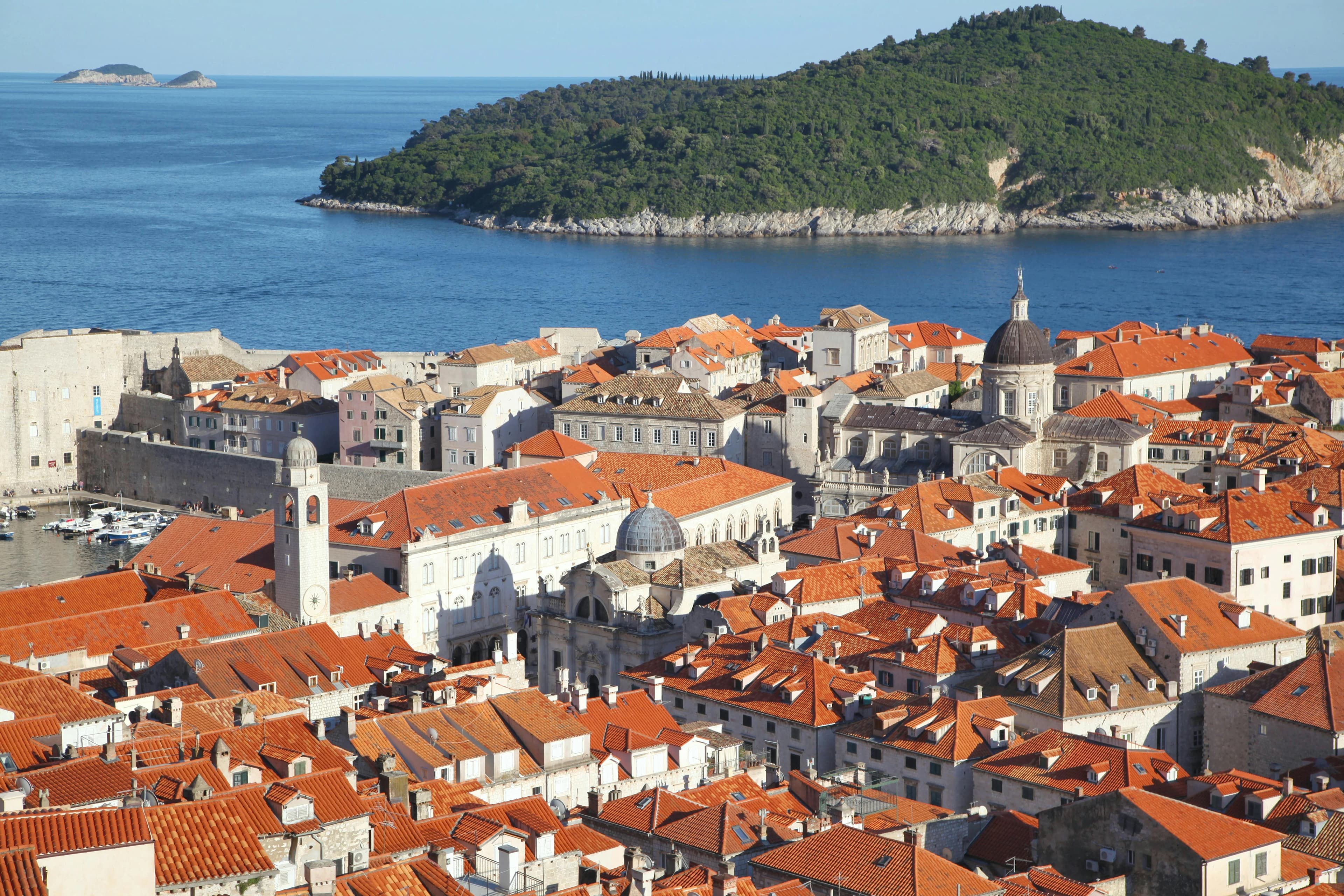
Croatian cuisine is a Balkan punch in the mouth - in the best possible way. If you want to eat like a local, you’ll need more than just pointing at menus. Here’s the vocab to describe flavours, dishes, and dining experiences without sounding like a tourist.
Basic Taste Vocabulary
Slano
/slâːn/“Salty”
The baseline flavour of most Croatian food. If it’s not slano enough, you’re probably eating tourist bait.
Kiselo
/kǐselo/“Sour”
Key for describing pickled things (kiseli kupus) or that face-twisting rakija you just drank.
Ljuto
/ʎûːto/“Spicy”
Rare in traditional dishes, but useful if you’re dousing your food in ajvar or feigning bravery.
Dish Types
- Janjetina - Roast lamb. If you’re in Dalmatia and don’t try this, you’ve failed.
- Crni rižot - Squid ink risotto. Looks like tar, tastes like the sea.
- Pašticada - Slow-cooked beef in sweet-sour sauce. Comfort food for nonna-level cooking.
Dining Phrases
Never say “I want”. Croats find it rude. Use “Molim” (Please) like a civilised human.
| Phrase | Meaning |
|---|---|
| Možemo li dobiti jelovnik? | Can we get a menu? |
| Ovo je preslano. | This is too salty. |
| Račun, molim. | Bill, please. |
Regional Variations
Coastal Croatia leans on seafood and olive oil. Inland? Meat and potatoes. If you’re in Slavonia, everything comes with kulen (spicy sausage) and a side of existential dread from the flat landscape.